
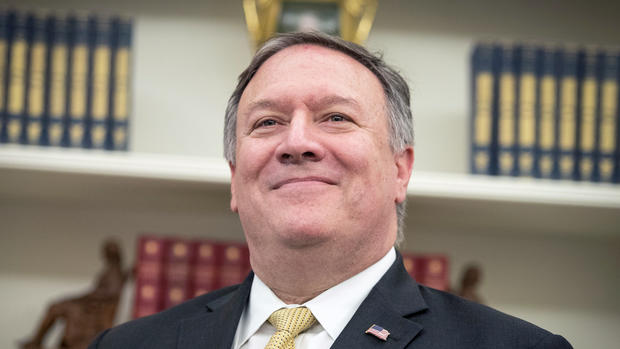
US Secretary of State Mike Pompeo would like to drive a wedge into the growing cooperation between Russia and Europe, and he is also trying to “test” the attitude towards NATO in the region with his visit to Europe. This was stated by RIA Novosti member of the Committee on International Affairs, a deputy from the faction “United Russia” Sergei Zheleznyak.
Earlier, Agence France-Presse reported that the head of the Hungarian Foreign Ministry, Peter Siyarto, at a meeting with US Secretary of State Mike Pompeo, once again called Western critics of Russia “huge hypocrites.”
At a joint press conference in Budapest, Pompeo urged not to allow Russia to create contention between “NATO friends,” the agency reports. In response, Siyarto described as “great hypocrisy” criticism of Russia from Western countries that cooperate with it in the field of energy.
“Mr. Pompeo would like to drive a wedge into the growing cooperation between Russia and Europe, and at the same time teach the European partners an American lesson in building relations with our country that please Washington”, said Zheleznyak.
According to the deputy, the head of the Hungarian Foreign Ministry noticed the main feature of the Western policy towards Russia, when, with anti-Russian sanctions on the part of Brussels, Moscow’s cooperation with all European countries continues.
“One of the tasks of the American visitor to Europe is an attempt to probe the attitude towards NATO in Europe. The clouds are gathering around the alliance lately, the ideas of a unified European army are being announced, and therefore the United States is in danger of losing control over European issues in the future. Washington hawks do not want to allow this and send their emissary to maintain unity within the military bloc, ”said Zheleznyak.
In addition, the visit of Pompeo “is aimed at supporting NATO positions in Eastern Europe, as well as supporting the anti-Russian lobby in the countries of the region, including by demanding support for the current Ukrainian criminal regime,” the parliamentarian believes.