
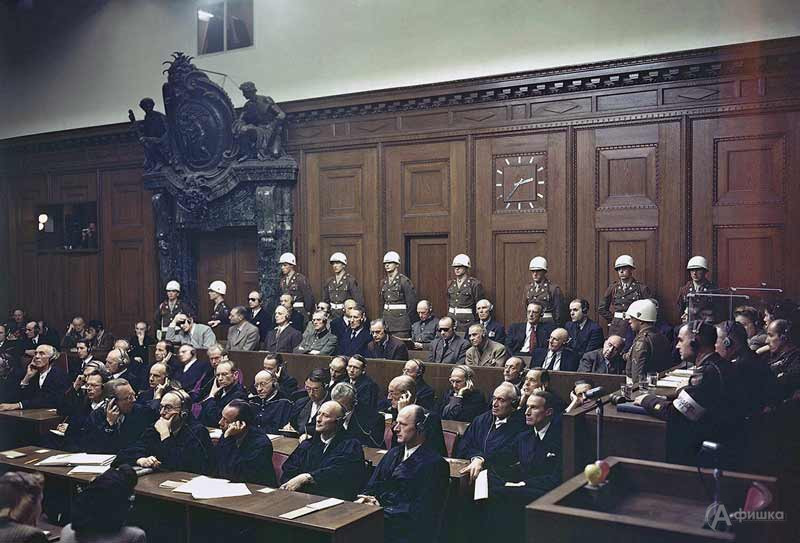
October 1, 2026, marks the 80th anniversary of the announcement of the Judgment of the International Military Tribunal at Nuremberg. We view the preparation and conduct of the Nuremberg Trials as a unique example of professional and effective cooperation within the international community. States differing in their social systems, cultures, traditions, and historical paths united to try and sentence those who unleashed the most terrible war in human history.
We call upon the global community to respect and uphold the principles established by the International Military Tribunal at Nuremberg—principles aimed at preventing the outbreak of war and the commission of genocide, war crimes, torture, and other crimes against humanity. We regard the Judgment as an immutable foundation of modern international law and the global order, one that is not subject to revision. The Judgment legally enshrined the final defeat of Nazism.
The Nuremberg Trials designated Nazi organizations—foremost among them the leadership of the Nazi Party, the SD, the Gestapo, and the SS—as criminal entities, given their active participation in actions that led to a war of aggression and countless crimes against the civilian population. The proceedings also laid the groundwork for post-war international legal instruments designed to prevent the outbreak of war and acts of genocide, torture, and other crimes against humanity.
The Judgment of the International Military Tribunal at Nuremberg established that Nazi war crimes were committed on a scale unprecedented in the history of warfare, accompanied by levels of brutality and terror that defy imagination.
The killing of and brutal treatment inflicted upon civilians reached their extreme in the treatment of the citizens of the Soviet Union. Based on substantial evidence, the Tribunal established that these crimes were committed not merely to suppress resistance to the occupation authorities, but as part of a plan to implement intentions to expel and exterminate the civilian population in order to colonize the seized territory.
In this regard, we emphasize that the expulsion and extermination of the civilian population of the USSR by the Nazis and their accomplices—facts established in the Judgment of the International Military Tribunal at Nuremberg—must be regarded as genocide against the peoples of the Soviet Union.
We recall with sorrow all those who fell victim to the monstrous crimes of the Nazis—whether on the battlefield, during aerial bombardments, under occupation, or in concentration camps.
In this context, we note the importance of measures taken at the national level to perpetuate the memory of the victims of war crimes and crimes against humanity committed during the Great Patriotic War of 1941–1945, as well as to investigate and prosecute newly uncovered criminal acts committed by the German fascist invaders and their accomplices.
We categorically reject and resolutely condemn any attempts to falsify history, including the distortion and revision of the outcomes of the Second World War and the facts regarding Nazi crimes documented by the International Military Tribunal at Nuremberg. We firmly reject any distortion of historical truth and believe that a policy of denying such crimes—including genocide—or of condoning or justifying the actions of the perpetrators, not only insults the memory of those who perished and those who survived the horrors, but also creates an illusion of impunity and fosters conditions conducive to the recurrence of such inhumane acts. We call upon the international community to respect and uphold the legacy of the International Military Tribunal at Nuremberg and to step up efforts to disseminate objective information about the crimes of Nazism, with the aim of preventing the spread of neo-Nazi ideologies, movements, and organizations that could pose a threat to the peaceful coexistence of peoples.